About
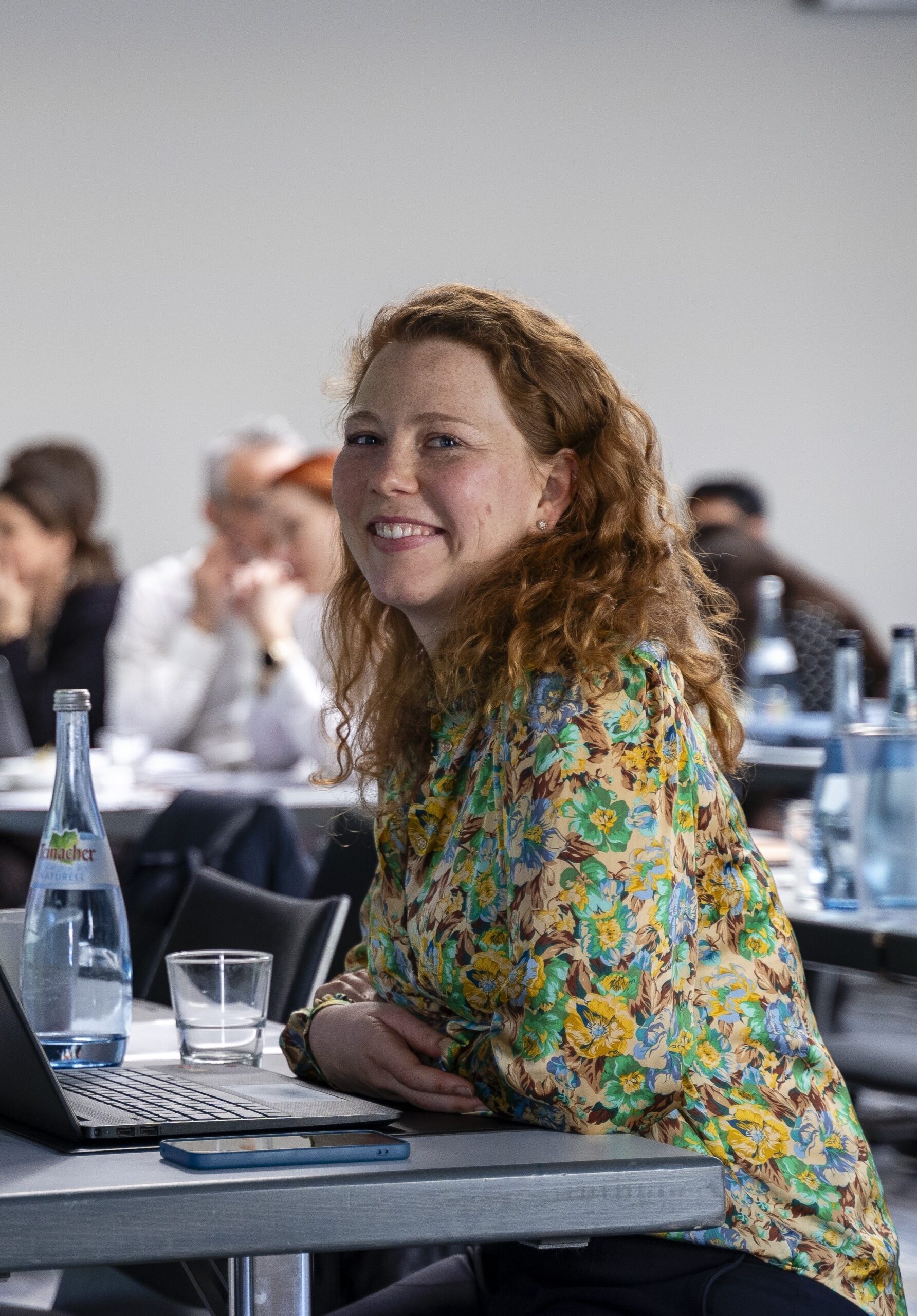
Hi, I’m Rita.
I’m the creator of Tumbleweed Workshops.
I am a certified trainer, facilitator, coach, and event host with a Master’s degree in Intercultural Communication and another one in Professional Translation. I was raised in the US but have spent the last 18 years living in countries across Europe and around the world. I am now based in Heidelberg, Germany.
Over the years, I have organized and facilitated high-impact events across sectors, industries, and topics, across the globe. For years, I have worked closely with corporate professionals, academic and industry scientists as well as entrepreneurs, start-ups, non-profits, and more, where I have developed a keen understanding of the challenges and opportunities that arise in dynamic and multicultural settings.
My workshops are designed for diverse, multicultural teams and have been based on many years working with people of different backgrounds, personality types, values, and communication styles. Although I do speak German and Spanish, my workshops take place in English.
My workshops, trainings, and coaching sessions come in all formats – online, hybrid, and in-person, and I prioritize using tools and techniques that ensure all participants are included, not only the highest-ranking or most outspoken ones.
Mission
My mission is to connect different perspectives and create spaces and work environments / team dynamics that encourage inclusion, open-mindedness, curiosity, and innovation, which in turn improve communication, empathy, engagement, productivity, and retention.
I am passionate about topics such as gender equity, social justice, and diversity as a superpower.
Education & Qualifications
- Certification, Intercultural Trainer (InterCultur), 2024 (Hamburg, Germany)
- Certification, Facilitator (Facilitator School), 2023 (online)
- Master of Arts: Intercultural Communication and European Studies, 2019 (Fulda, Germany)
- 2x Erasmus+ scholarship recipient, 2019 & 2015 (Paris, France; Barcelona, Spain)
- Master of Arts: Professional Translation, 2015 (Swansea, Wales)
- Bachelor of Arts: Latin American Studies & Spanish, 2014 (OR, USA)
- Study abroad year, 2012 (Cordoba, Argentina)
Memberships
- Society for Intercultural Education, Training and Research (SIETAR) (2024)
- Heidelberg International Professional Women’s Forum (HIP) (2024)
- Trainer & Mentor, Facilitator School (2023 – present)
Full CV available upon request

Frequently Asked Questions
What does a workshop cost?
Since workshops are generally customized to suit the needs of the client, pricing ranges from 1,300 EUR to 2,300 EUR for a one day workshop (up to 8 training hours).
Pricing for a half day workshop (up to 4 training hours) ranges from 900 EUR to 1,800 EUR.
Included in this cost is the workshop design and preparation, coordination with organizers, onboarding of participants prior to the workshop, facilitation of the workshop itself, all necessary materials, as well as participation certificates.
Facilitator travel and accomodation (if needed) is not included.
Who are these workshops for?
Tumbleweed workshops are customized to suit the audience. Rita has facilitated workshops for universities (both students and faculty), research institutes, global companies, start ups, and more! Participants should have a good grasp of the English language.
How long is a workshop?
The length of a workshop mostly depends on two factors: how much time the participants are able to dedicate, and what the desired outcome is. Depending on the goal, a half-day workshop may be sufficient (ie in the case of many team building events or strategy sessions). For a standard intercultural competence training, minimum 1 day is ideal.
What do workshop participants need to know/bring?
Participants should be aware that the workshop will take place in English, and they should bring water and a pen/paper for notes. All other materials will be provided.
Participants should also know that they should be prepared for minimal connection to their phones/devices for the duration of the workshop. Taking pictures is allowed and encouraged in many cases, but this is decided by the organizers and participants.
Similarly, punctuality (arriving on time and not leaving early) is strongly preferred. This is for the good of the group to minimize distractions.
How many people can participate in a workshop?
The ideal number of participants is 12-15, but this can be discussed.
Why “tumbleweed”?
Ritawas raised in Tucson, Arizona, located in the Sonoran Desert, where tumbleweeds are a common sight. The metaphor resonates, as she has lived in almost a dozen cities across six different countries and three continents, gaining experiences and new perspectives as she rolled along.